Seamless Funding Flows: How Modern Transactions Support Real-Time Football and Racing Bets

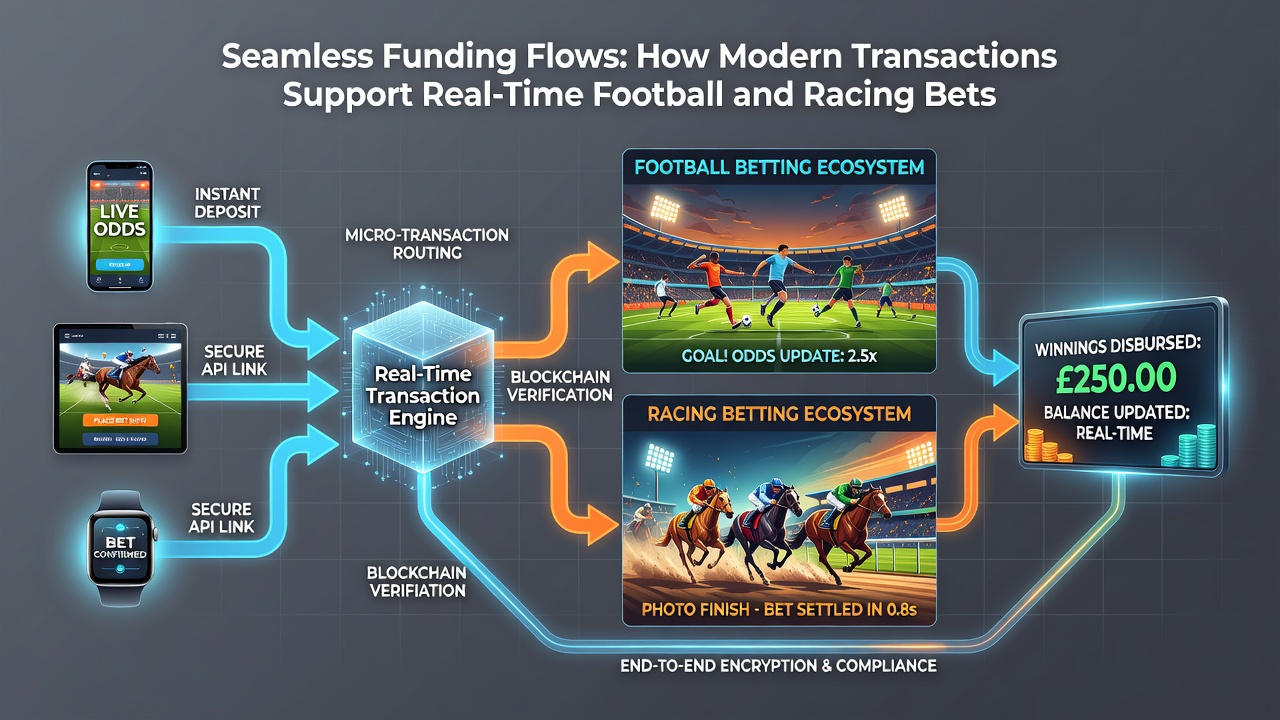
Modern payment systems have transformed how bettors engage with live football matches and horse racing events because instant funding options remove traditional delays that once interrupted in-play wagers. Observers note that transaction speeds now measured in seconds rather than minutes allow participants to react immediately to shifting odds during a Premier League game or a steeplechase at Cheltenham, while the underlying infrastructure relies on secure APIs that connect banking apps directly to betting platforms.
Instant Transfers Reshape Live Betting Dynamics
Digital wallets and open banking protocols deliver funds without the multi-day clearing periods associated with older card methods, and this acceleration proves especially useful when a football match enters extra time or when racing stewards delay a photo finish result. Data from transaction processors indicates that average deposit times dropped below three seconds across major platforms by early 2026, enabling bettors to place accumulators on half-time scorelines or each-way bets on late-running favorites without missing the window. Those who track these metrics report that platforms integrating real-time rails such as Faster Payments in the UK alongside similar instant systems elsewhere see higher engagement during peak evening fixtures.
Security layers built into these flows include biometric verification and tokenization that prevent fraud while maintaining speed, so users complete a deposit and confirm a wager in a single continuous action rather than navigating multiple screens. Researchers at payment technology firms have documented how encryption standards evolved to handle increased volumes without introducing latency, which matters when odds fluctuate rapidly after a goal or when a horse breaks from the stalls.
Football and Racing Demand Distinct Payment Patterns
Football betting often centers on short bursts of activity around set pieces and substitutions, whereas racing requires sustained attention across multiple races in a card, yet both benefit from the same seamless funding backbone. In July 2026 several operators reported record transaction volumes during international tournament windows and major festival meetings because users could fund accounts between races or during VAR reviews without leaving the mobile app interface. Industry reports highlight that mobile-optimized wallets now support recurring deposit limits set by the user, which helps maintain control while capitalizing on live opportunities such as cash-out features or new ante-post markets.
Cross-border bettors encounter additional considerations because currency conversion happens inside the same transaction flow, and platforms that embed competitive exchange rates reduce hidden costs that previously discouraged international participation. Observers point to partnerships between betting operators and established fintech providers that ensure compliance with varying regional rules without slowing the user experience, whether the activity originates from North American jurisdictions or European markets.
Regulatory and Infrastructure Developments
Authorities in multiple regions have updated guidelines around instant payments to balance consumer protection with operational efficiency, and the American Gaming Association has published summaries showing how U.S. states with legalized sports betting adopted similar rails to those used in other countries. These frameworks encourage operators to maintain transparent audit trails that record every deposit timestamp alongside the corresponding wager, which supports dispute resolution when live markets close unexpectedly. In parallel, academic studies from institutions such as the University of Nevada Reno examine latency effects on betting behavior and find that sub-second confirmations correlate with more measured staking patterns rather than impulsive decisions.
Additional safeguards include automated velocity checks that flag unusual deposit sequences while still permitting legitimate users to top up during a race meet or a tense penalty shootout. Payment providers continue refining these controls through machine learning models trained on historical patterns, and the result is fewer interruptions for verified accounts even as overall transaction counts rise.
Conclusion
Transaction technology now underpins the entire live betting ecosystem for football and racing by delivering reliable, rapid funding that matches the pace of on-field and on-track action. Continued refinement of these systems, supported by regulatory oversight and infrastructure investments, sustains the capacity for bettors to engage in real time without friction, and the patterns observed through mid-2026 suggest further integration with emerging payment standards will extend these capabilities across additional markets and device types.